 Jhuli
Jhuli
The Mongoose at the Sacrifice
Mahabharata · Ages 7-11 · 4 min read
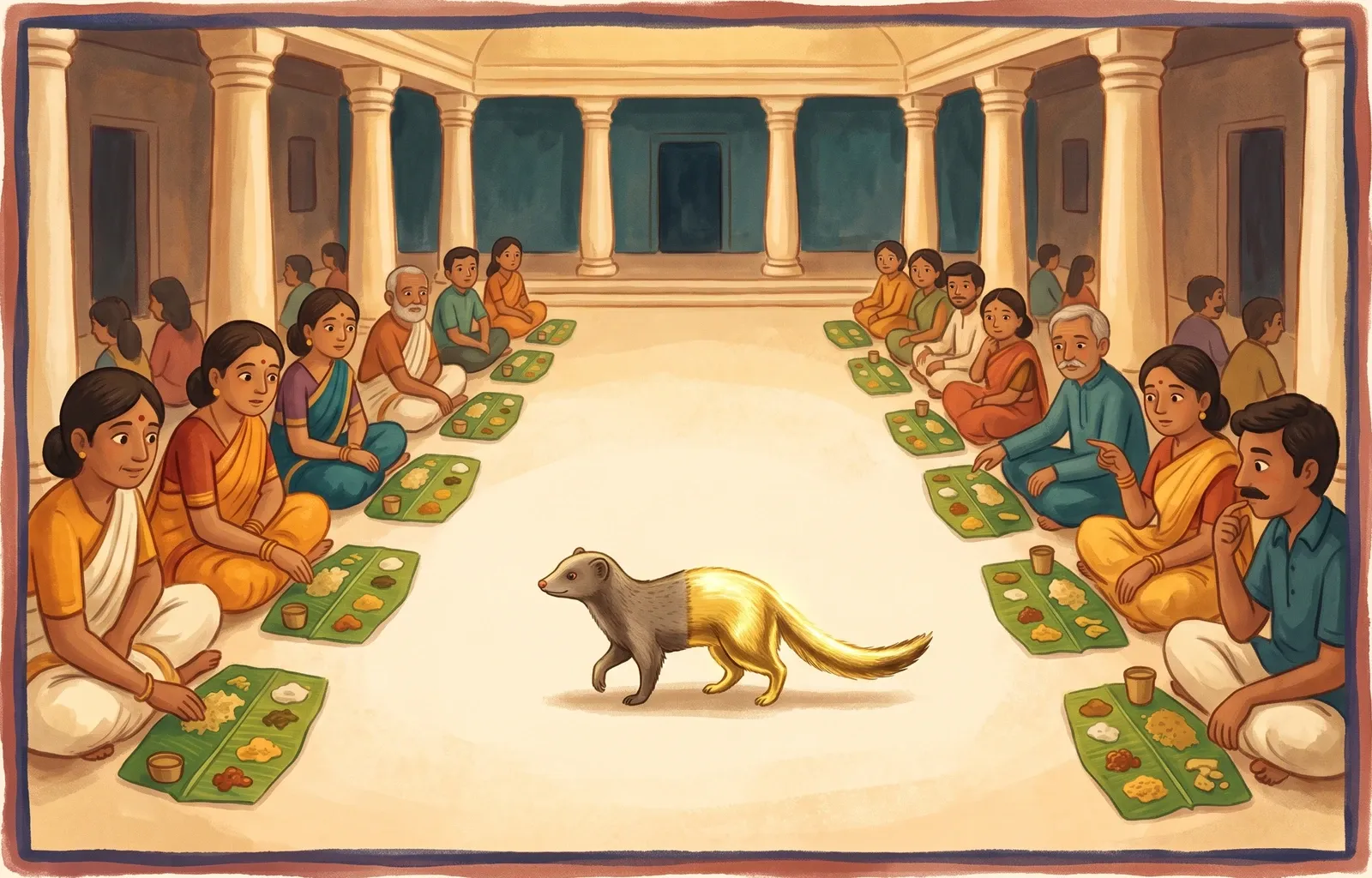
After the great war was over, the good King Yudhishthira held the most magnificent ceremony anyone had ever seen. He gave away mountains of gold, fed thousands upon thousands of people, and offered gifts beyond counting. When it was done, everyone praised it as the grandest, holiest sacrifice in all of history.
And then, into the middle of all that splendour, there trotted a very strange little mongoose. For one half of its body was ordinary brown fur, but the other half shone like pure gold. The mongoose rolled this way and that in the leftovers of the great feast, then stood up and sighed. The golden half had not spread at all. The brown half stayed brown.
The puzzled people asked the mongoose what it was doing. And the mongoose told them its story.
“Long ago,” it said, “in a time of terrible famine, there lived a poor family who had run out of almost everything. At last they gathered a tiny bit of flour, just enough for one small meal, their first food in many days. But just as they sat down to eat, a hungry traveller knocked at their door, begging for food. And one by one, the father, the mother, the son, and his wife each gave the stranger their own share, every last bite, though they themselves were starving, until the guest was full and all their food was gone.
“I happened to roll in a few grains of flour that had fallen on their floor,” said the mongoose, “and where those grains touched me, my fur turned to gold, from the sheer goodness of what that family had done. Ever since, I have gone to every grand sacrifice in the land, hoping to turn my other half gold as well. But not all the gold and feasts of all the great kings together have ever matched the holiness of that one poor family giving away their very last meal.”
And the mongoose trotted away, still half brown, leaving the whole grand gathering very quiet and very thoughtful.
An original retelling of the mongoose at Yudhishthira's sacrifice, from the Mahabharata (public domain).