 Jhuli
Jhuli
Why the Moon Is Pale
Khasi folk tale (Meghalaya) · Ages 5-9 · 3 min read
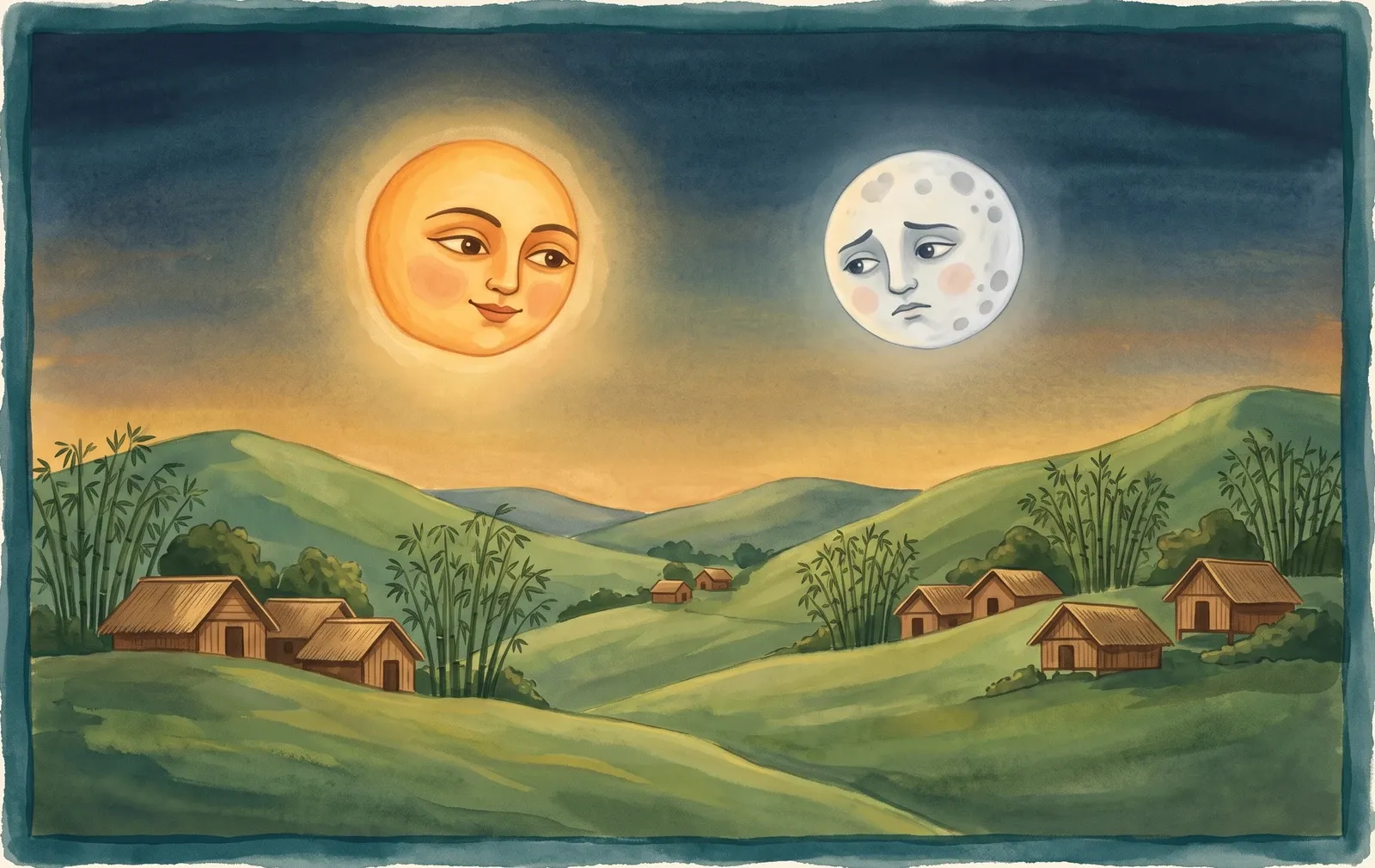
In the very old days, the sun and the moon were sister and brother, and they shone side by side in the sky, each one just as bright and golden as the other. The sun, the elder sister, was gentle and warm. The moon, her younger brother, was bright and bold.
For a long while the two of them lit the world together, turn and turn about, and all was well between them.
But as time went on, the moon grew proud of his own brightness. He began to think himself finer than his sister, and he spoke to her carelessly, and unkindly. The gentle sun bore it patiently, again and again. But one day her brother was so rude, and so unkind, that her heart was truly hurt.
She had been working at the hearth, and her hands were covered in soft grey ash. And in her hurt and her surprise, before she could think, she flung a handful of that ash straight across her brother’s bright, boastful face.
The ash dimmed him at once. His golden glow faded to a soft, pale silver, and the smudges of it settled into his face and would not wash away. And when the moon saw what he had become, and remembered why, he was filled with shame.
After that, the moon could not bear to shine in the daytime sky beside his radiant sister. He waits now until she has gone to rest, and only then does he come out, pale and quiet, to give the world what gentle light he can through the night.
And if you look up at the moon on a clear evening, you can still see them, the soft grey marks upon his face. They are the ash his sister threw, all that time ago. And they are why the moon is pale.
An original retelling of a Khasi pourquoi tale from Meghalaya about the sun and the moon (public domain folk tradition).